
The Softbank-backed company has set a price band of Rs 72 to Rs 76 per share for the maiden share sale and is expected to test the appetite for new-age loss-making companies.

Richest Indian Gautam Adani's conglomerate has cited an improved net debt to operating profit ratio and more than halving of loans from public sector banks to allay concerns about it being overleveraged. In a 15-page note in response to CreditSights report calling the group overleveraged, it said companies in the group have consistently de-levered, with the net debt to Ebitda ratio declining to 3.2 times from 7.6 times in the last nine years. "The businesses operate on a simple yet robust and repeatable business model focused on development and origination, operations and management and capital management plan," the note, reviewed by PTI, said.

A retirement fund can be helpful for all age groups, but ideally one should start investing early to beat market swings and gain from compounding.

Madhabi Puri Buch, the first female chairperson of Sebi, doesn't plan to rest on her laurels in her third and final year in office and has set out an ambitious goal, such as moving towards a same-day and instantaneous settlement cycle for the secondary market.

Combined debt-equity ratio of top companies declines but interest expenses outgrow profits.

The move comes within months of a crisis at JPMorgan Asset Management Company.

'The success of one or two IPOs does not dictate whether the upcoming IPOs will be successful or not, but it certainly indicates that the markets and investors are enthusiastic about startup IPOs.'

The SBI auction will be the biggest nationwide online sale.

The RBI holds its next policy meeting in early June.

'We are sure FY25 is going to be better...But to call out that all problems are behind us is a bit early.' 'The underlying business sentiment has not changed significantly.'

Tata Power saw a big sell-off, with the stock falling almost 8 per cent after declaring disappointing results for the October-December quarter (Q3) of 2023-24 (FY24) on Friday evening. The company reported net consolidated revenue of Rs 14,650 crore, up 4.4 per cent year-on-year (Y-o-Y), and earnings before interest, tax, depreciation, and amortisation (Ebitda) of Rs 2,607 crore, up 2 per cent Y-o-Y, in the quarter, led by higher sales across Odisha distribution companies (discoms) and capacity addition in renewables. This was well below consensus estimates.

Fitch Ratings on Thursday said the resurgence of COVID-19 infections may delay India's economic recovery, but won't derail it, as it kept the sovereign rating unchanged at 'BBB-' with a negative outlook. It projected a 12.8 per cent recovery in GDP in the fiscal year ending March 2022 (FY22), moderating to 5.8 per cent in FY23, from an estimated contraction of 7.5 per cent in 2020-21. Fitch had in June last year revised outlook for India to 'negative' from 'stable' on grounds that the coronavirus pandemic had significantly weakened the country's growth outlook and exposed the challenges associated with a high public debt burden.

'To sustain our growth trajectory, we must continue to explore and capitalise on growth opportunities.'

The trends remained sluggish in the primary stock market

The Kerala chief minister's four years in office may well be remembered for the way he handled Cyclone Ockhi, two floods, Nipah, and now COVID-19, reports Shine Jacob.

If they are made accountable, bad loan cases will shrink dramatically, recoveries will rise, and the NCLT process will be more manageable, asserts Debashis Basu.

Adani group opened a $1.2 billion copper plant, bought a port in Odisha, raised stakes in a cement company and stitched an alliance with rival Mukesh Ambani's Reliance Industries, all in a matter of one week in signs that the apples-to-airport conglomerate has shrugged off the Hindenburg effect and is back to rapid expansion spree. In the last one week, Adani group has through regulatory filings and press statements announced expansions and investments in its mainstay ports business, diversification into metal refining, fund infusion into a two-year-old cement foray and continuing progress in the commissioning of its mega solar project.
Banks to get more aggressive and act like PE investors

Pranjal Kamra, CEO, Finology Ventures, lists seven efficient ways to cope with the rise in EMIs even as you balance your monthly budgets.

'Historically, equities have consistently outperformed debt, gold, property, and other assets over a reasonable period.'

Accelerating inequality, the market dominance of tech platforms and remote working are likely to be the longest-lasting legacies of the COVID-19 crisis, the WEF said in a report on Monday. Releasing its Chief Economists Outlook report during the online Davos Agenda Summit, the WEF said that beyond managing the pandemic and vaccine rollout, these trends could shape a new era of fiscal, monetary, and competition policy. Deglobalisation is seen as the least likely of the current trends to continue in the longer term; particularly as international coordination is key to resolving global challenges such as vaccine manufacturing and distribution.

There was no smooth surge in middle class prosperity for foreign businesses to tap into because of the Indian economy was mismanaged, argues Debashis Basu.

The Reserve Bank has revoked the deposit-taking status of Dewan Housing Finance (DHFL), the first financial services firm to go for bankruptcy proceedings, and has reclassified it as a non-deposit taking housing finance company, before approving the Piramal group's bid to take over it towards the end of the resolution process. The revelation comes in the June 7 NCLT Mumbai order that has approved the Rs 35,250-crore bid for the once second largest mortage lender by Piramal Capital & Housing Finance, forcing over 65 per cent haircut on the creditors and just Re 1 to its NCD holders to whom it owes more than Rs 45,000-crore. On the 14th page of the 86-page NCLT order by HP Chaturvedi and Ravikumar Duraisamy, it says DHFL no longer is a deposit taking NBFC but a non-deposit taking one.

India is Asia's other bad debt headache.

South Korean auto giant Hyundai Motor Company is considering tax implications of listing its Indian unit before taking a final call, according to sources privy to the development. Hyundai Motor is mulling an initial public offering (IPO) for its Indian arm to raise around $3 billion (at a valuation of up to $30 billion), and talks are in the early stages between the company and bankers, banking sources revealed. Hyundai Motor India Ltd (HMIL), however, declined to comment on the development.

It will take over large non-performing assets of banks and help in revive companies ridden with bad debts.

Power Grid Corporation (PGCIL) intends to ramp up its capex substantially through the next two financial years. The Public Sector Undertaking (PSU) utility posted flat consolidated revenues of Rs 10,700 crore in the third quarter of the current financial year (Q3FY24) and reported 7 per cent year on year (Y-o-Y) growth in net profit to Rs 4,000 crore. The Q3FY24 capex stood at Rs 3,440 crore and capitalisation at Rs 1,780 crore, taking the 9MFY24 total to Rs 8,700 crore capex and Rs 5,800 crore capitalisation, respectively.

The latest fraud is a failure of management supervision and accountability, as no bad debt was generated and no cash was involved

Fitch on Tuesday affirmed India's sovereign rating at 'BBB-' with a stable outlook, on robust growth and resilient external finances, but said weak public finances remain a challenge. India's rating has been unchanged at 'BBB-', which is the lowest investment grade, since August 2006. "Fitch Ratings has affirmed India's Long-Term Foreign-Currency Issuer Default Rating (IDR) at 'BBB-' with a Stable Outlook," it said in a statement, adding strong growth potential is a key supporting factor for the sovereign rating.

The number of times public sector undertakings (PSUs) have held conference calls with investors, their capital management, and debt financing are among the parameters that the Centre will use to judge their performance for the first time, a senior official in the know said. The government will evaluate PSUs for FY22 based on new parameters that were finalised by the Department of Public Enterprises (DPE) in consultation with the Department of Investment and Public Asset Management (DIPAM) last year, the official said. The government had included more conditions in the memorandum of understandings (MoUs) - used to set annual targets - that public sector enterprises sign with the DPE every year. These included a consistent dividend policy, which seeks to transfer dividends by PSUs every quarter; and market capitalisation or share price improvement over the sectoral index on an annual average basis for listed companies.

TMFs invest in a public index, so investors know beforehand which instruments the fund will invest in.

The target was for banks to sell Rs 2 trillion worth of non-performing assets to NARCL, the so-called 'bad bank, by 2021-2022. Only 10 per cent of this has been executed.

The legal battle between Byju's and lenders in the US on the edtech firm's $1.2-billion term loan B (TLB), along with the company skipping an interest payment of $40 million on the loan, has made the other investor Davidson Kempner Capital Management, "extremely concerned", according to the people familiar with the matter. They said Byju's has closed a Rs 2,000-crore ($250 million) round from the US-based investment firm and it may stop or consider slowing down the flow of various tranches of that capital to the company. It may also decide not to provide any new funding or participate in any such round in the future, the sources said.

The Essar group, Jindal Steel and Power, Monnet Ispat, Bhushan Steel and the Avantha group have been asked to close deals by March-end.

Report points out corporate vulnerability indicators remain elevated.

With the stock market entering a bull phase, many believe the Singals can bring in the much-needed equity capital and reduce their debt.

HDFC Equity, the largest equity fund, also managed by Prashant Jain, with a corpus of Rs 10,445 crore, has 9.4 per cent of its assets in SBI.
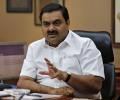
Well-known US activist investor Hindenburg Research has alleged that Adani Group was "engaged in a brazen stock manipulation and accounting fraud", a charge the conglomerate described as malicious, unsubstantiated, one-sided, and having done with malafide intention to ruin its share-sale. Hindenburg, a US-based investment research firm that specialises in activist short-selling, said its two-year investigation reveals that "the Rs 17.8 trillion ($218 billion) Indian conglomerate Adani Group has engaged in a brazen stock manipulation and accounting fraud scheme over the course of decades." The report comes ahead of a Rs 20,000 crore follow-on share sale of Adani Group's flagship Adani Enterprises.
.jpg)
The NPAs of banks stood at over Rs 3 lakh crore as on December 2014.
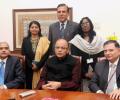
Analysts were expecting the government to propose higher capital infusion for banks.
